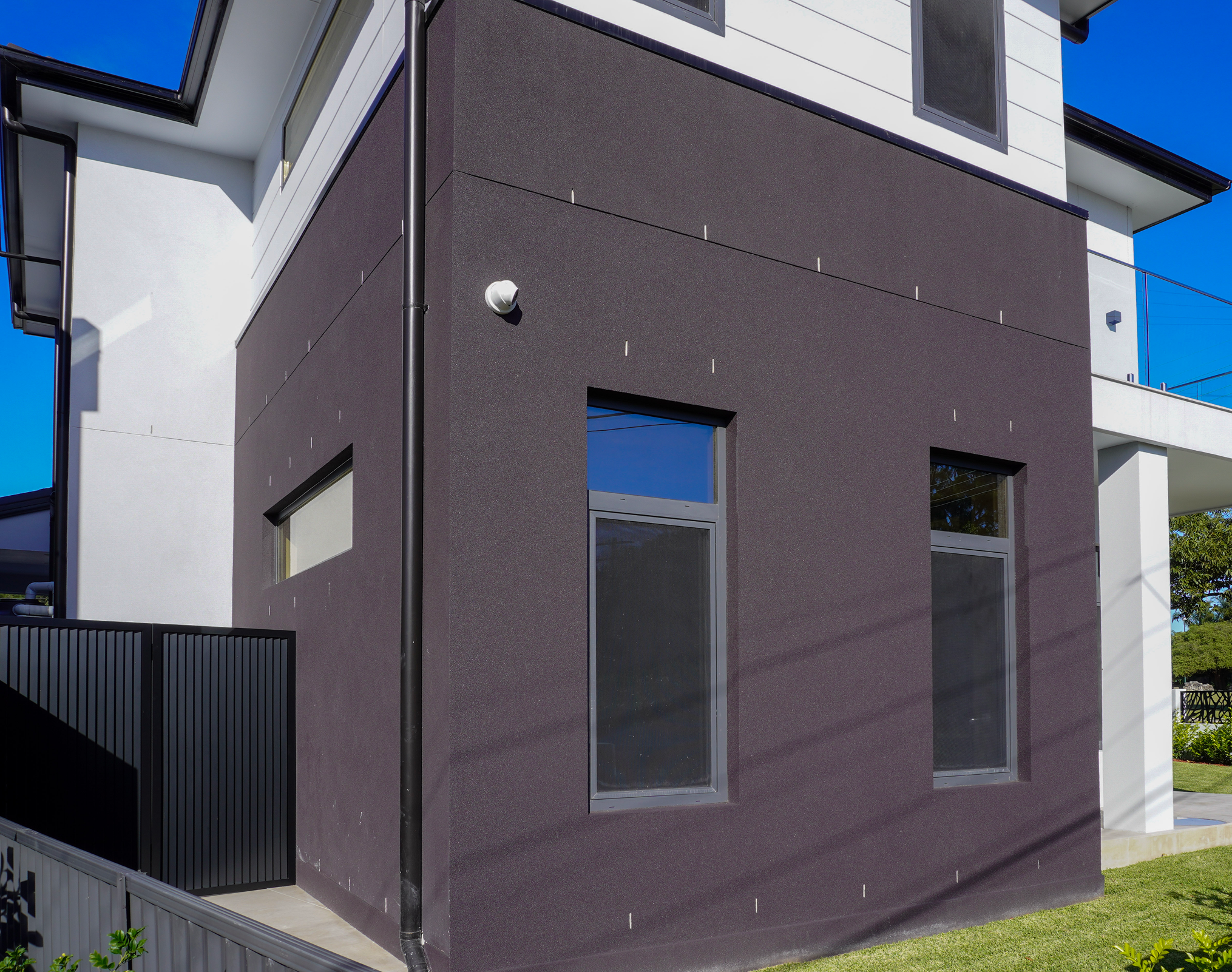

Within the last 15 years, the rise of new building substrates like PVC, EPS Foam and fibre cement sheets forced the industry to move beyond these traditional boundaries.
Material science and engineering have now transformed rendering from a simple protective layer into a sophisticated field of construction technology.
Figure 1: Traditional painted sand and cement rendering. Project Code WS0357 – Paddington – NSW
The introduction of polymers into mortar changed the trade forever by increasing flexibility and bond strength. This was followed by the revolution of coloured textures, which removed the need for separate painting stages and provided a more durable finish.
Another major shift occurred with the development of keycoats (specific surface enhancers), allowing render to adhere to difficult surfaces like PVC or previously painted substrates that would have rejected traditional mixes. These advancements ensured that renders could accommodate some of the building movement, reducing the risk of cracks and delamination on modern, lightweight structures.
As technology progressed, the industry saw a clear split between functional rendering and decorative artistry. The trend of stucco venetians moved rendering into the category of high-end interior design, separating it from standard exterior finishes. Today, micro cement is changing the game again by offering a thin, incredibly strong layer that works on floors, walls, and even joinery. This material provides a level of versatility that ancient stucco could never have imagined, allowing for a seamless look across different surfaces.
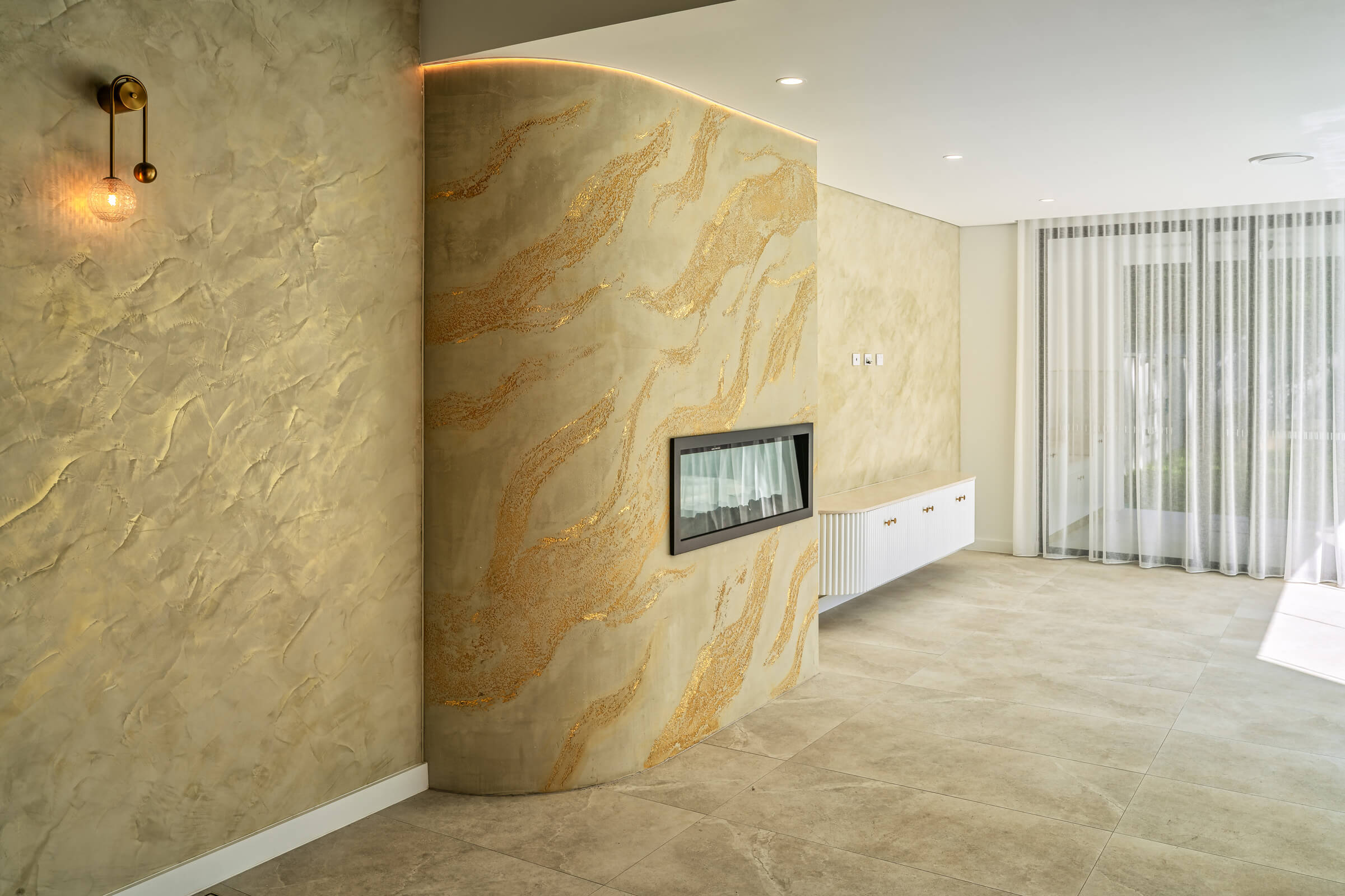
Figure 2: Walls in Venetian plaster with gold wax and Fireplace in Split Stone technique with gold flakes. Project Code WS0314 – Peakhurst – NSW
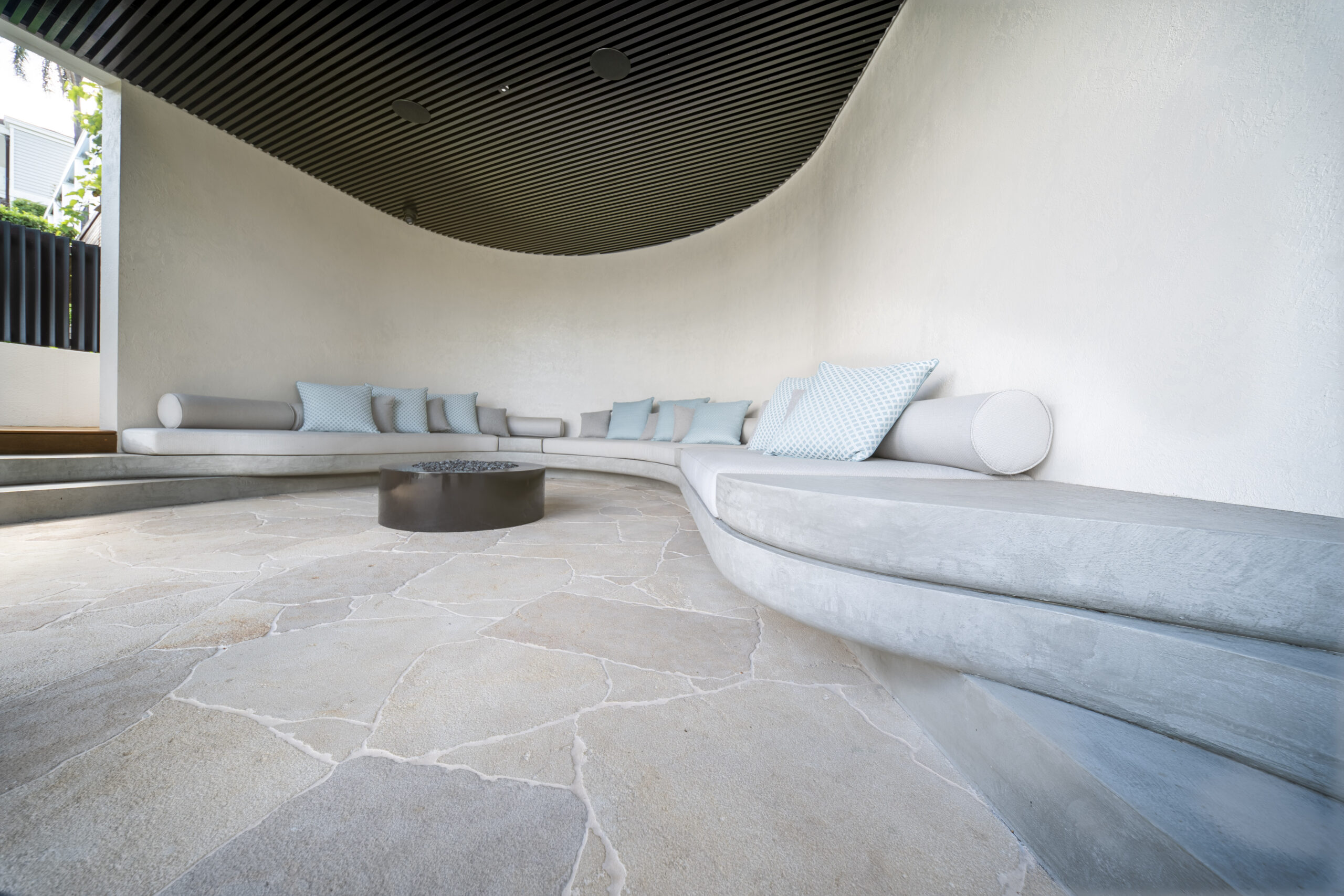
Figure 3: Walls in Russian Stamp micro cement; Bench and steps in Forcrete microcement. Project Code WS0412 – Vaucluse – NSW
To summarise one should view modern rendering as a product of intense engineering rather than just a mix of sand, cement and water. The trade has evolved from basic mud coatings to high-performance systems that can bond to almost any surface you choose. By understanding these new materials, selecting a finish that offers both the durability of modern science and the beauty of traditional craftsmanship can elevate a project to another level.